
 Menu
Menu


From plan to action: LATU showed how its 2030 strategy is coming to life
At an internal event with teams from different areas, the institution presented concrete projects across 15 initiatives ranging from international expansion to artificial intelligence and sustainability.
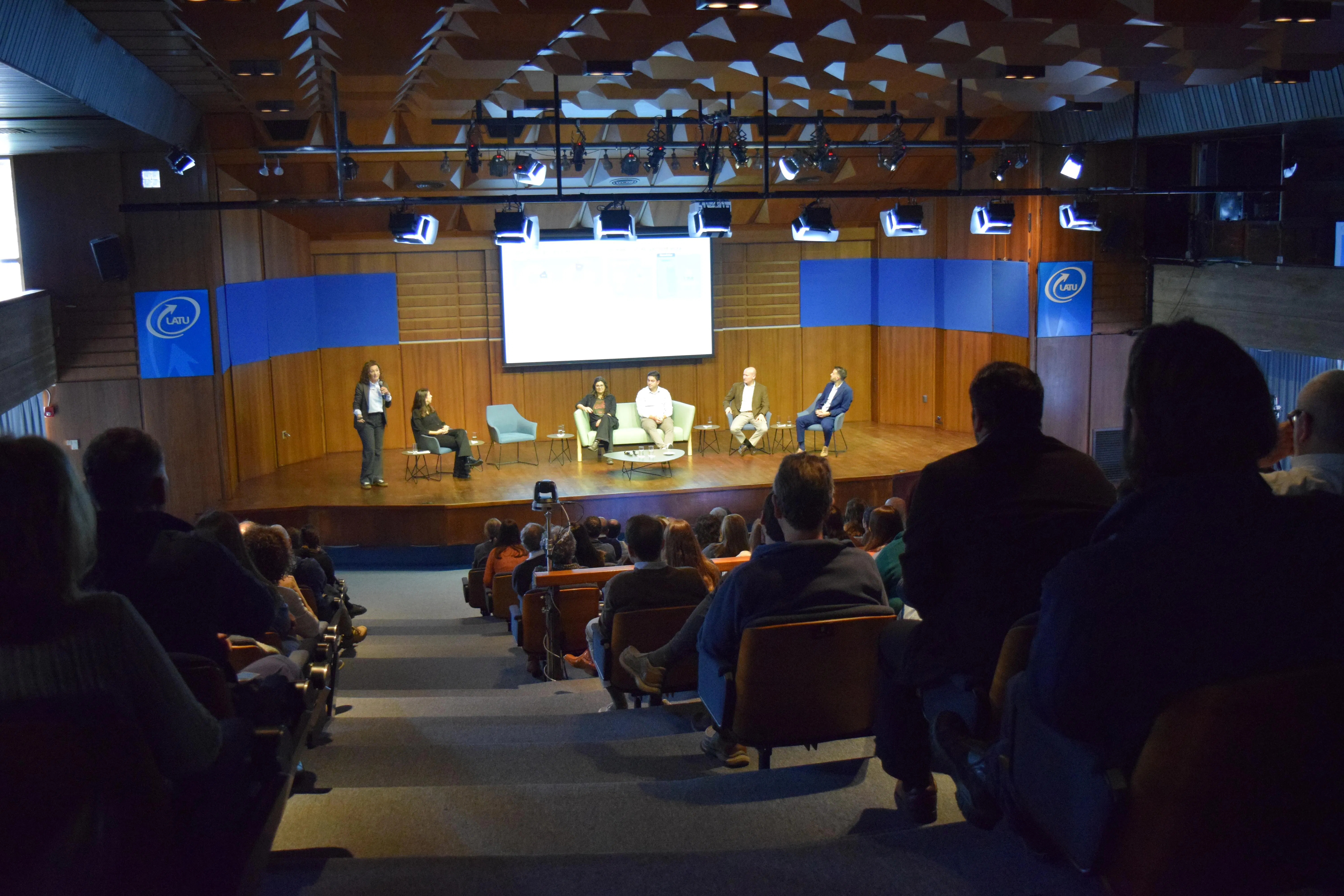
On July 31, LATU held the event “From Plan to Action”: an update on its 2030 strategic plan, which was collectively defined last year. The opening was led by General Manager Jorge Cernadas, who emphasized that “strategic planning is not just about defining a plan and setting it down in a document, but about establishing activities.”
The 2030 strategy is organized around four pillars—autonomy; innovation and technology transfer; efficiency and communication; and team and culture—and this year it is being translated into three vectors: promoting sustainable business development, accelerating digital transformation, and strengthening the institutional image.
Textile quality, artificial intelligence, and innovation for livestock production
The presentations were organized into three blocks. The first included the agreement with the Magallanes Livestock Association (Chile), presented by Karina Demaría, head of the Textiles, Raw Wool, Tops and Leather Department, which gives the association access to LATU’s wool certification services. The support behind this is IWTO licensing, held by only eight laboratories worldwide; LATU is the only one in the Americas. Also in the first block, Mariana Irisity, consultant in the Local Development Department, presented two support programs for micro and small enterprises—which represent 97% of active companies in Uruguay and generate 44% of employment—with a presence in all 19 departments and coordination with 33 institutions.
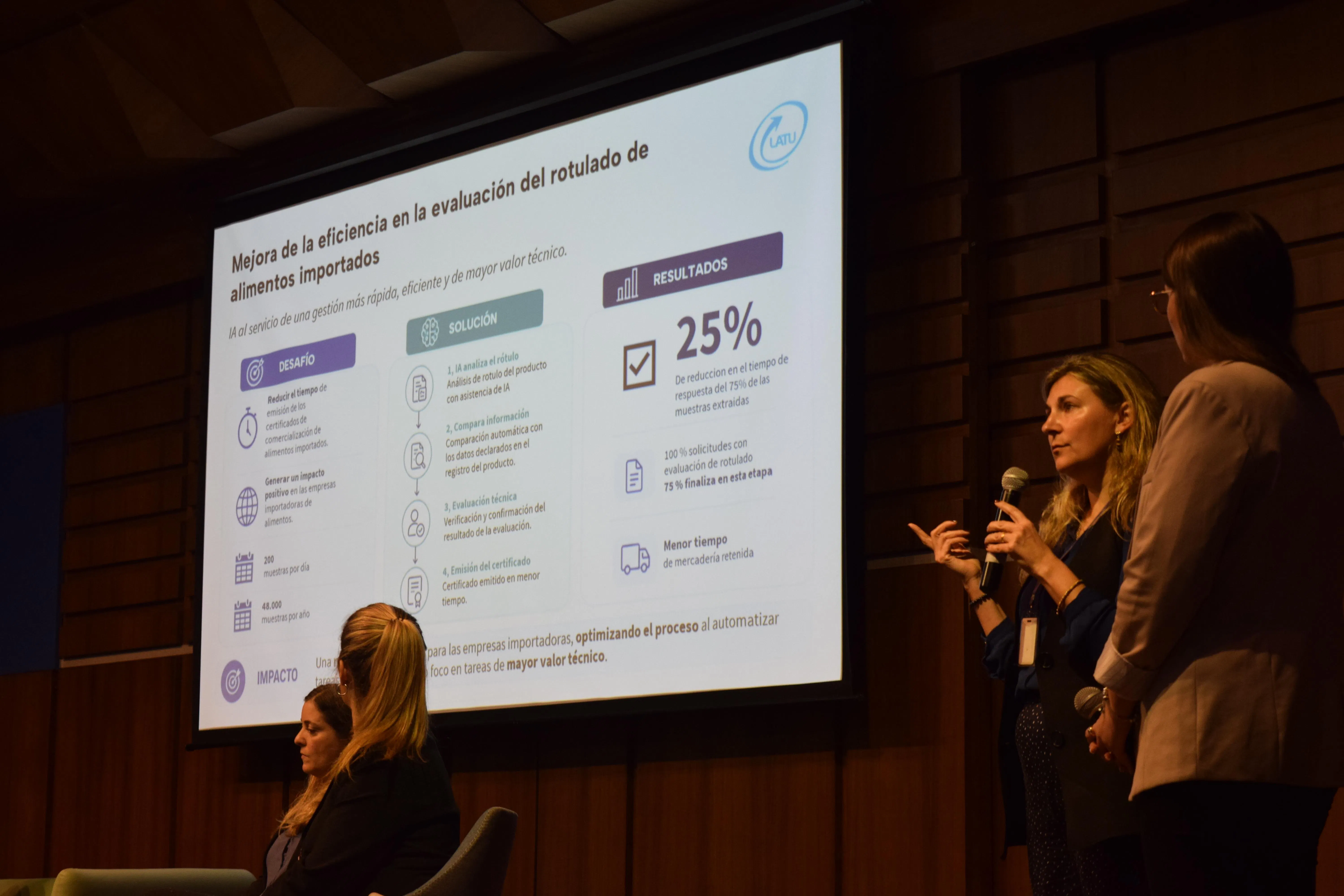
Another notable initiative in the first block responds to the challenge of speeding up food labeling verification. Mónica Fernández and Magdalena Bone, from the Conformity Assessment Department, explained that work is underway with Microsoft’s AI for Good Lab on the development of an artificial intelligence tool to automate the assessment of labeling for imported foods—currently 48,000 samples per year—with a projected 25% reduction in certification times.
At the same time, Blanca Gómez, researcher at Latitud, presented a project with Marfrig that studies corn genotypes and cooking processes to maximize cattle weight gain: optimizing this chain could represent up to USD 1,224,000 per year for the feedlot. The block closed with Alejandro Di Maggio and Andrés Rocha, from the Planning and Management Control Department, who presented a system of economic indicators showing that LATU’s own-source revenue currently covers 44.2% of total costs, with 12.9% growth compared to 2025.
Building reputation, improving customer service, and working within an organizational culture that fosters innovation
The second block began with Valeria Rainusso, from the Human Capital Management Division, who spoke about the organizational culture assessment commissioned to the consulting firm CPA, which included interviews with senior management, questionnaires for supervisors, and five focus groups. The institution is currently working on an action plan based on those results.
In the area of external communication, Natalia Pelufo, coordinator of the communications area, presented indicators, results, and new actions to raise awareness of what LATU does. She also highlighted content development for new channels and the #InnovationInAction publication series: articles published on LinkedIn aimed at specific audiences and featuring technical information. Among the key figures presented were the reach of interviews conducted in the media, the 107,349 people who choose to follow LATU on social media, and a public opinion survey showing that 9 out of 10 people are familiar with LATU, while more than one-third of the population identifies LATU as a trustworthy institution, and a similar proportion associates it with innovation.
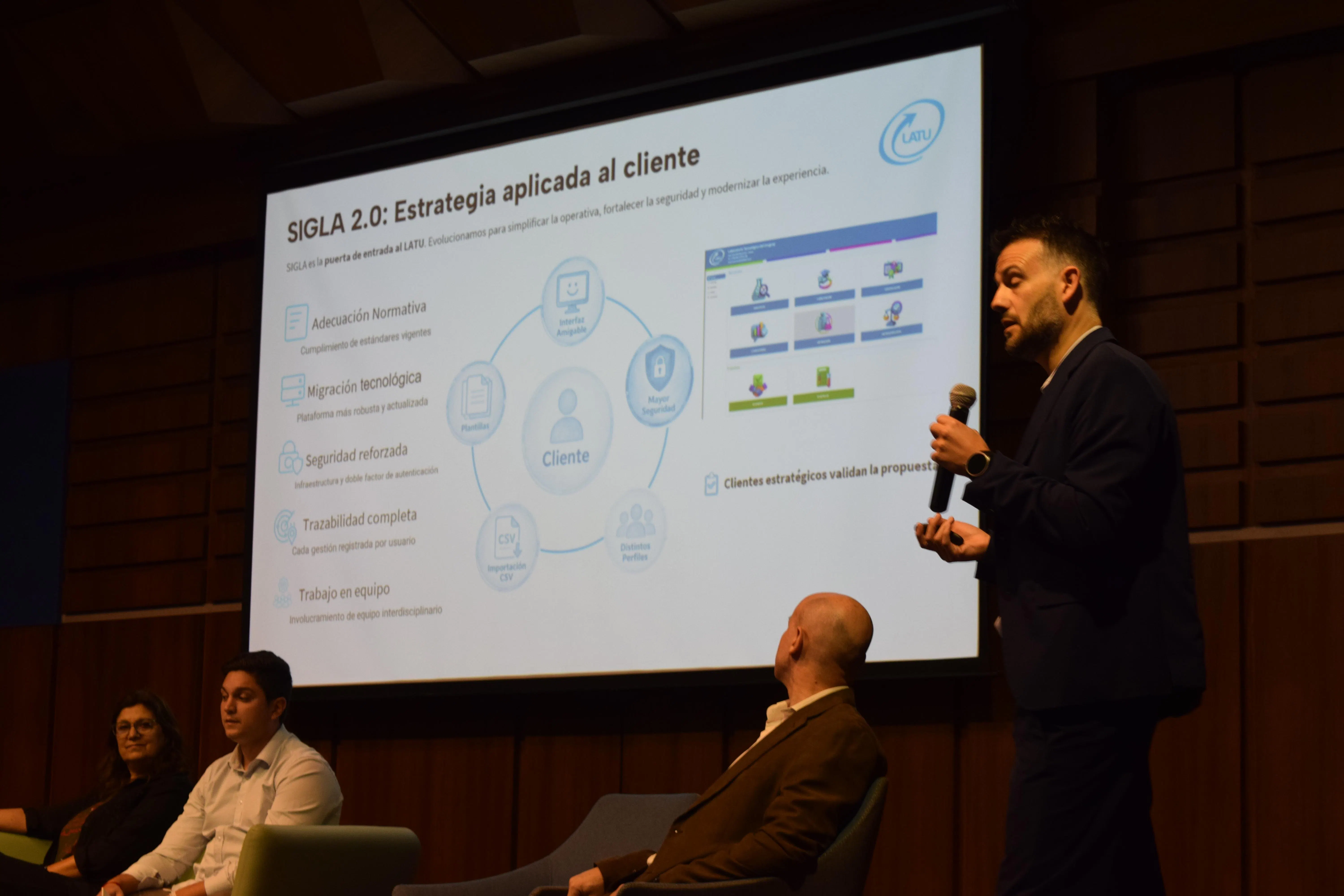
Also in this block, Rodrigo Silva, head of Customer Service, and Fernando Arrieta, director of Information Systems, presented SIGLA 2.0, a fully redesigned service management system focused on usability, incorporating two-factor authentication, full traceability of actions, and an interface validated with strategic clients. This system is expected to replace the previous one in August or September. The block also included Mauricio Bellora, technician at the Commercial Management Directorate, who presented the 2030 commercial strategy—including a recent visit to Paraguay that has already led to a consultancy project with that country’s Ministry of Environment—and Carina Di Candia, who presented Project Sofía, an initiative seeking LATU’s certification in the Gender Equity Quality Model in 2026, supported by a 130-hour training plan available to all staff.
An environmentally responsible laboratory, new developments at Espacio Ciencia, and synergies in LATU’s Innovation Park
The third block opened with progress in environmental management. Among the highlights, Marcelo Olivieri, director of Engineering and Maintenance, noted that the second reverse osmosis plant installed in 2025 allows LATU to become fully independent from OSE for its water supply. In addition, Martín Rodríguez, from Quality Coordination, presented key data on resource consumption: the institution uses less than half the water and less than one-third of the electricity that would correspond to it according to international standards. It was also announced that a 100 kW solar photovoltaic plant is close to being awarded.
At the same time, Martha Cambre, head of Espacio Ciencia, outlined its roadmap under the motto “Connecting Science.” LATU’s interactive museum has welcomed more than 2 million visitors overall, 50,000 per season, enjoys excellent visitor ratings, and ranks among the three most-visited educational attractions in the country. This year it added Orbi, an AI-powered virtual assistant, and a virtual reality exhibition.
Ingenio, meanwhile, is celebrating 25 years with figures that speak for themselves: 120 active companies have emerged from the incubator, generating more than 2,100 jobs and achieving an estimated annual turnover of USD 145 million, with clients in more than 100 countries. This presentation was delivered by Rosana Fernández, head of Ingenio.
Toward the end, Miguel Sena, from the Commercial Management Directorate, shared an overview of Tech Community, an initiative of LATU’s Innovation Park designed to help resident companies get to know one another and collaborate. It has already produced concrete results—such as the start of joint work between Cuti and Improfit, and possible collaboration between LSQA and Nareia on certifications—and its next meeting is scheduled for September 3.
Knowing and valuing what we do
President Lucila Arboleya closed the event with a reflection on the importance of this kind of gathering as a way to communicate what different teams are doing and strengthen internal dialogue: “We are a huge institution, and the LATU family does an enormous number of things. This is just a brushstroke, but it will be the first of many.”