
 Menu
Menu


Reliable chemical measurements: LATU's contribution to health, industry and quality
Certified Reference Materials (CRMs) are essential for ensuring the accuracy, traceability and comparability of chemical measurements. In Uruguay, LATU, as the National Metrology Institute and sole provider of these materials, plays a strategic role in strengthening the country's quality infrastructure and supporting key decisions in health, environment, industry and safety.
As Uruguay's National Metrology Institute, LATU is responsible for developing, maintaining and disseminating national measurement standards. This ensures that a given quantity is measured uniformly throughout the national territory. In the case of chemical measurements, these standards are called Certified Reference Materials (CRMs). These are materials characterized through one or more metrologically valid procedures and accompanied by a certificate that establishes the value of a property, its associated uncertainty—that is, the range within which the true value of the measured quantity lies—and a statement of its metrological traceability.
A key tool for reliable results
The primary application of CRMs is quality control and the validation of analytical determinations carried out by laboratories. Therefore, they serve as a control for laboratory methods—against which results are compared—or as standards to provide traceability to measurements. Their use ensures that the results obtained are reliable and comparable at both national and international levels, enabling decision-making based on accurate information across areas as diverse as environmental protection, food safety, health, industry and security.
The availability of these materials strengthens the country's quality infrastructure, promoting continuous improvement of measurement processes. CRMs are developed in the areas of electrochemistry, inorganic chemistry, organic chemistry and gases, providing a fundamental tool to guarantee measurement quality both nationally and internationally. This also enables laboratories and industries to optimize resources, reduce waste and ensure the expected quality of products and services.
Tailored solutions
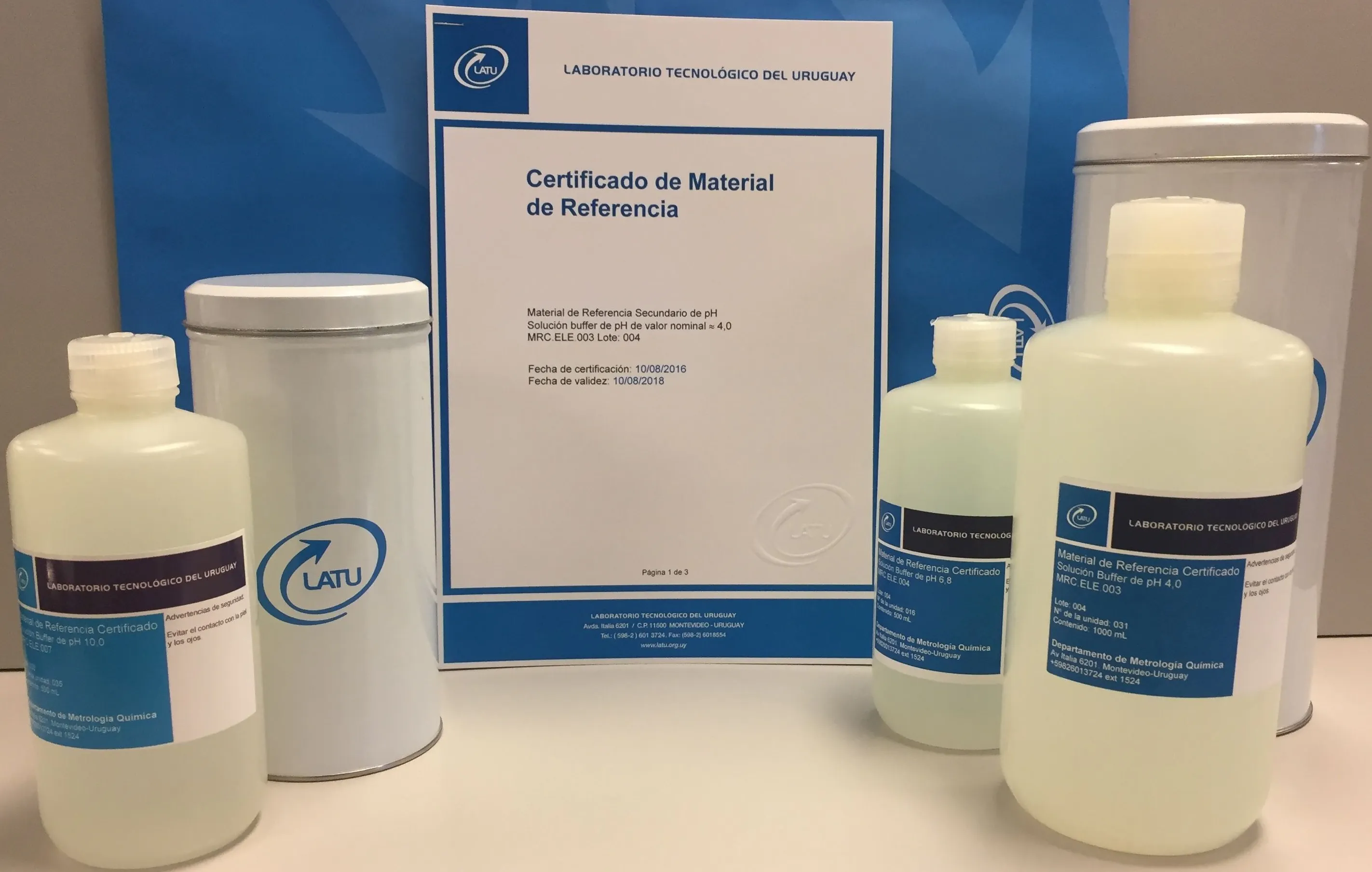
In the area of electrochemistry, LATU produces CRMs for pH (hydrogen potential, a measure of the acidity of a substance) and electrolytic conductivity (a measure of how easily an electric current passes through a conductive material), used for the calibration, adjustment and quality control of measuring instruments. These materials are employed by laboratories and industrial sectors in food, environmental, pharmaceutical and petrochemical fields, among others.
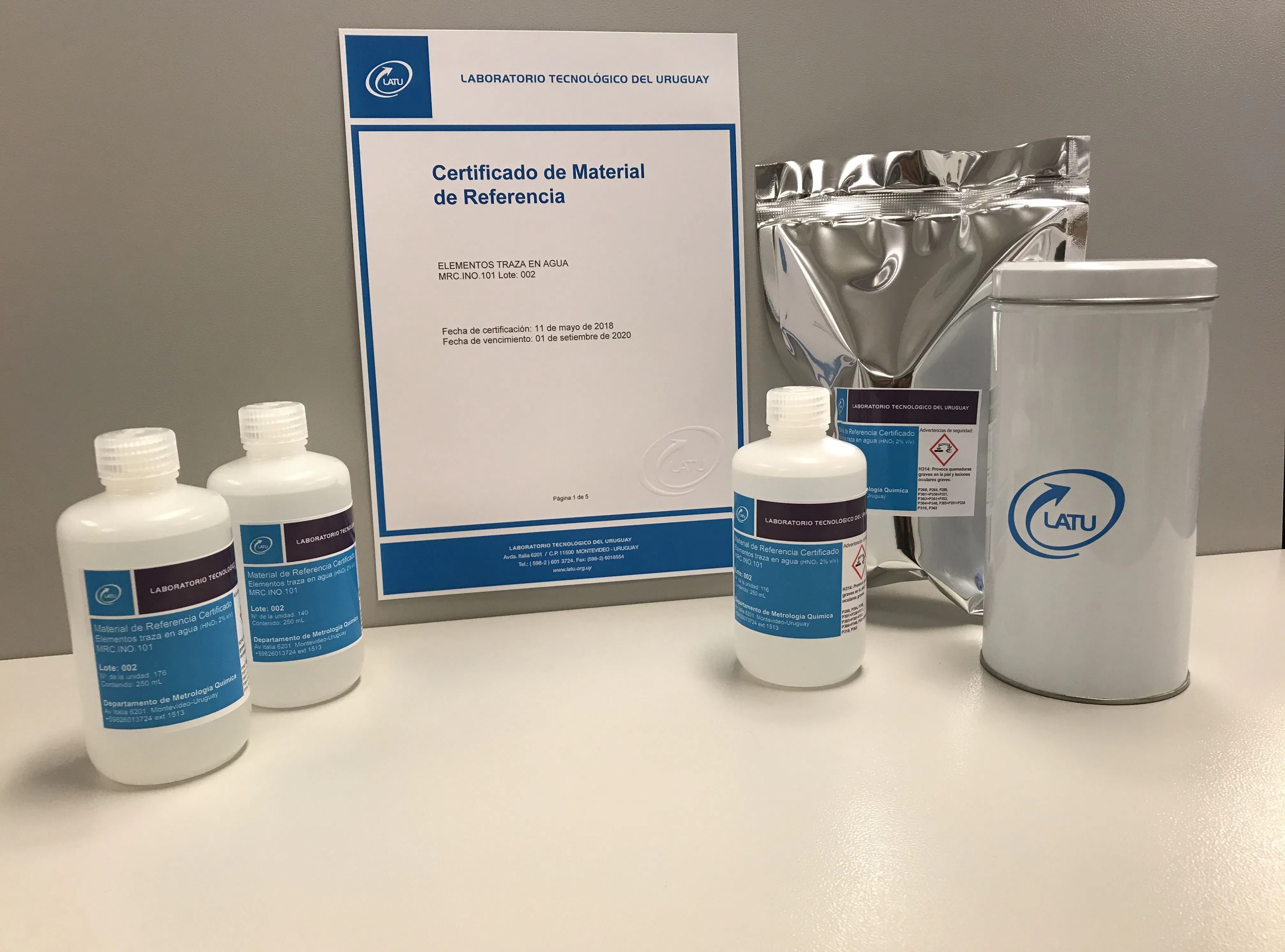
In inorganic chemistry, CRMs are developed for the determination of elements present in environmental matrices (water and effluents), such as arsenic, chromium, copper, iron, nickel, lead, selenium and zinc, among others. This work also has an impact on drinking water potability analyses. Materials are also produced in food matrices—for example, for the quantification of nutrients in powdered milk, infant formulas and cereals, as well as the determination of elements in yerba mate. High-accuracy methods are also available for the determination of electrolytes and other elements in human serum.
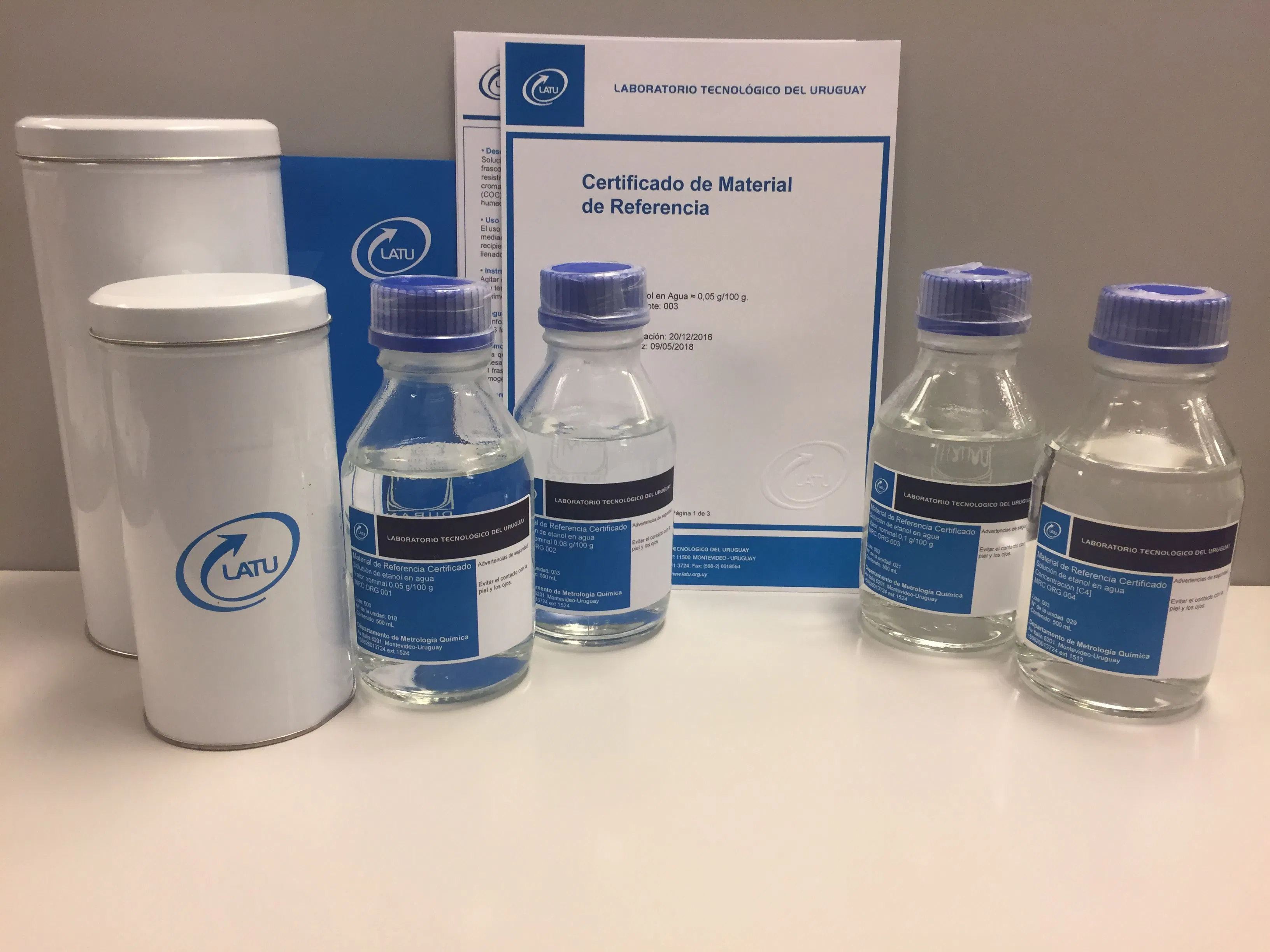
The organic chemistry area develops high-accuracy quantification methods using chromatographic techniques, which allow components in a mixture to be separated, identified and quantified, enabling the production of CRMs tailored to the needs of different users. Among these, ethanol-in-water CRMs are particularly notable, as they are used for the calibration and adjustment of breathalyzers, contributing to the reliability of measurements related to road and occupational safety.
Additionally, LATU works in the field of gas metrology, offering calibration of gaseous mixtures for measurement quality control and analyzer calibration. These solutions are used, among other applications, for vehicle emission control and greenhouse gas monitoring.
Quality with international recognition
All areas of the Chemical Metrology Department operate under a Quality Management System approved by the Quality System Task Force (QSTF) of the Inter-American Metrology System (SIM), in compliance with the requirements established by the ISO/IEC 17025 and ISO 17034 standards and the Mutual Recognition Arrangement of the International Committee for Weights and Measures (CIPM).
The Department's team of specialists also actively participates in technical forums and cooperation projects with national metrology institutes from the region and around the world, staying at the forefront of technological and metrological developments.
As part of its commitment to excellence, LATU regularly takes part in international measurement comparisons, in which its results are evaluated alongside those obtained by reference institutes from countries such as Germany, Australia, Brazil, Canada, China, South Korea, the United States, Japan, Mexico and Slovakia, among others. These evaluations confirm the international comparability of measurements performed in Uruguay and strengthen the country's position within the global metrological community.
A strategic contribution to the country
Through the development of CRMs and the building of high-level technical capabilities, LATU contributes to strengthening confidence in chemical measurements—an essential foundation for the country's competitiveness, innovation and sustainable development.